
hack ohi/o 2025
Reducing Friction in Everyday Movement
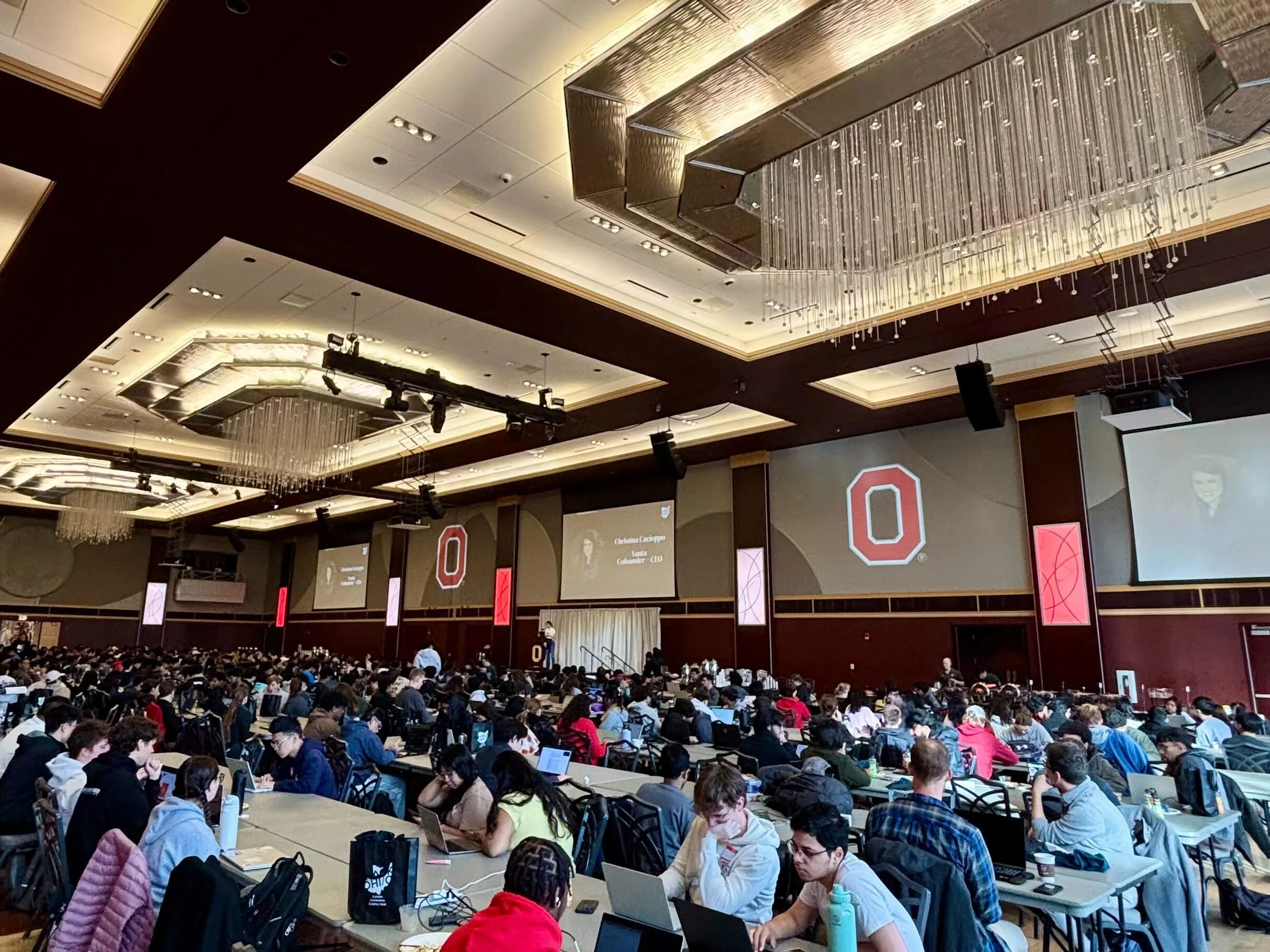
Hack OHI/O 2025 was a strong reminder of why we keep showing up to student hackathons: the pace of learning is fast, the ideas are practical, and the prototypes often land closer to real-world usefulness than people expect from a single weekend. From 99P Labs’ perspective, the event created the right conditions for experimentation, teamwork, and rapid problem solving. Students arrived with diverse academic backgrounds, quickly formed teams, and left with working demos that addressed everyday issues in society, business, and campus life.
This year, the biggest shift we noticed was how widely students used modern AI tools to increase their output and polish. AI-assisted coding, design iteration, and lightweight data analysis helped teams move past low-level implementation blockers and focus on impact. Instead of spending most of their time wiring basics together, many teams could test ideas, refine interfaces, and communicate value clearly. The result was a higher baseline of completeness across submissions, with more projects reaching “usable prototype” rather than “concept with slides.”
As a sponsor and partner, 99P Labs introduced the Friction Finder Challenge to focus that energy on a theme we care about: reducing friction in everyday movement and coordination. We asked teams to identify a real moment of friction and propose a solution that measurably improves how people move through spaces or make decisions in motion. The challenge welcomed software, hardware, and design concepts, but emphasized clear problem definition, creative thinking, and a coherent demonstration of the solution.
Across thirty submissions, we saw thoughtful coverage of campus mobility, crowding, accessibility, and coordination, often combining sensing, prediction, and visualization. The strength of the field came from how grounded the projects were in lived experience: lines that waste time, parking that adds stress, routes that require too much guesswork. Selecting winners was difficult because many teams delivered clear prototypes and credible paths to deployment, not just ambitious narratives.
The top projects reflected the core theme from different angles: Optimap tackled congestion in dining halls and study spaces through sensing and prediction, OSU SmartParking addressed the search for open surface-lot parking with computer vision and privacy-aware design, and gOSU simplified campus transit decisions by automatically computing the fastest routes from live bus data. For 99P Labs, these outcomes are exactly the point of sponsoring challenges like Friction Finder: students building tangible solutions to everyday movement problems, using modern tools responsibly, and demonstrating how applied AI can improve real experiences when paired with strong product thinking.
Stay Connected
Follow our journey on Medium and LinkedIn.