
AURA: Autonomous Understanding & Research Assistant
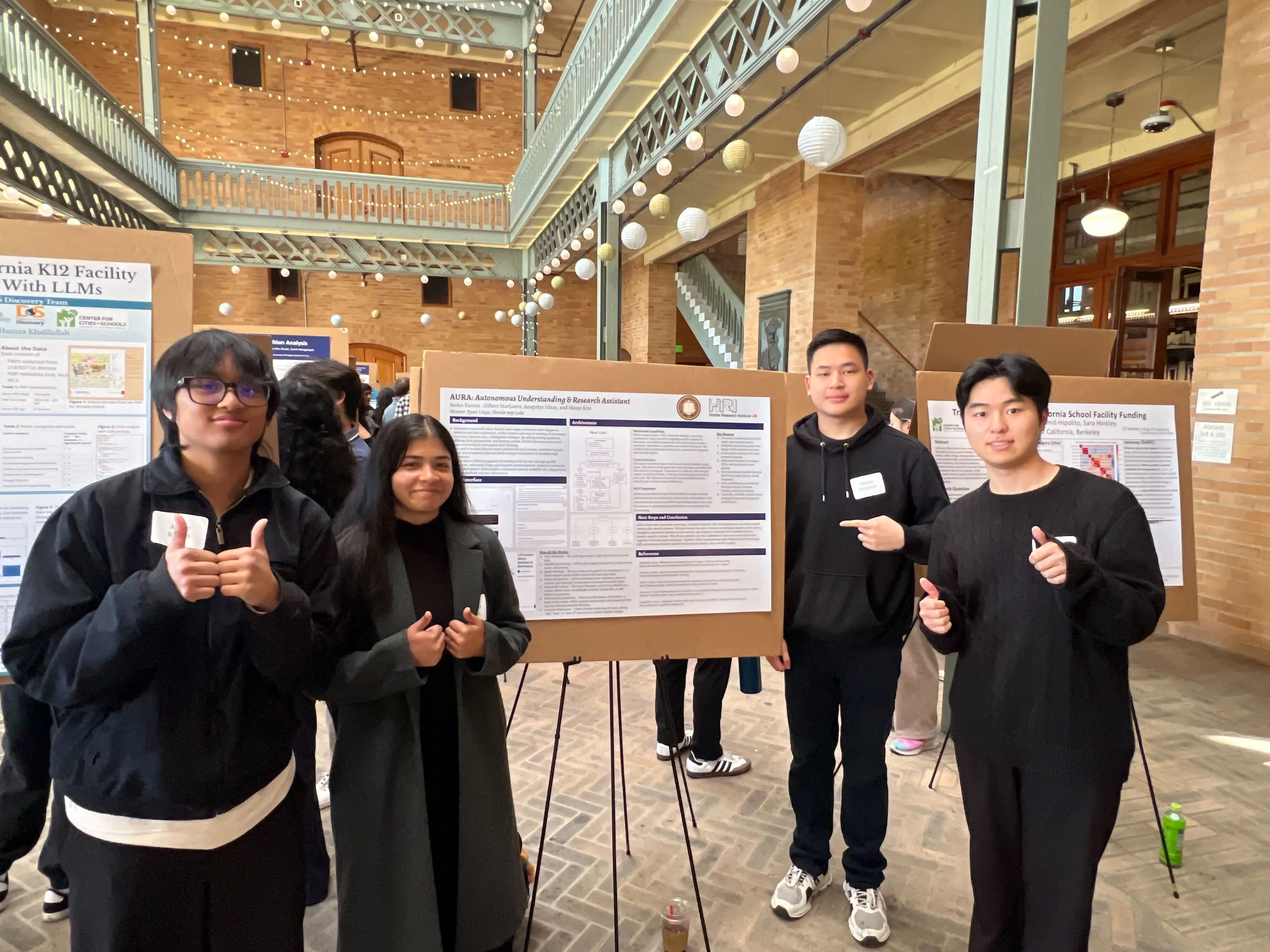
AURA: Autonomous Understanding & Research Assistant
AURA (Autonomous Understanding & Research Assistant) is a research ideation and synthesis system designed to bridge the gap between initial curiosity and an actionable research plan. Instead of treating research as a single prompt-response interaction, AURA models ideation as an iterative process that includes question generation, scope refinement, prioritization, retrieval, and synthesis. The goal is to help users move from “I’m interested in X” to a defensible set of research directions with clear rationale and starting points.
From a methodology standpoint, AURA is built around a retrieval-first philosophy that prioritizes verifiable sources over model memory. It integrates external knowledge repositories (for example, scientific literature via arXiv) and treats retrieval as a core step in the reasoning pipeline rather than an optional enhancement. This design directly targets a common failure mode of LLM-only research tools: confident outputs that are difficult to trace back to evidence.
AURA structures ideation as a staged workflow rather than a single-pass generation. The system begins with clarifying questions to surface goals, constraints, audience, and evaluation criteria, then converts those inputs into candidate research queries. Users can edit these queries and assign importance weights, creating an explicit prioritization signal that guides subsequent retrieval and synthesis. This blends human judgment with automated exploration to keep the system aligned with the user’s intent.
For synthesis, AURA emphasizes transparency and reliability through source filtering, relevance ranking, and multi-source comparison. Rather than collapsing uncertainty into a single narrative, it can highlight disagreements between sources and separate retrieved evidence from generated interpretation. The primary output is a structured research report that includes summaries, literature review components, key findings, recommendations, gaps, and linked references to support validation and follow-up work.
Finally, AURA extends research beyond static text by providing a visual canvas workspace for exploration and iterative refinement. The canvas supports mapping relationships among subtopics, clustering themes, and anchoring follow-up questions to specific nodes or documents, enabling deeper, context-aware investigation. Taken together, AURA functions as a research workflow environment powered by LLMs, aimed at improving the quality, traceability, and usability of AI-assisted research ideation.
Stay Connected
Follow our journey on Medium and LinkedIn.